
Hajj Conference 2026 Explores AI Governance, Pilgrim Digital Rights and Nanotechnology for the Kaaba Kiswa
Jeddah, Saudi Arabia – November 11, 2026
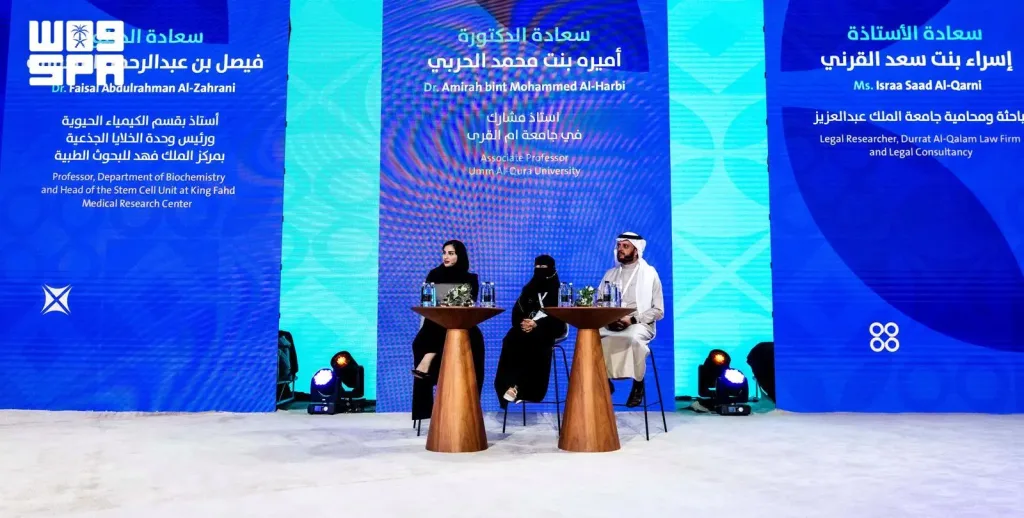
The sixth Hajj Conference and Exhibition 2026 in Jeddah hosted a research session titled “Artificial Intelligence and the Future of Digital Services,” exploring the governance of AI agents in Hajj operations, legal protection of pilgrims' digital rights, and proposed nanotechnology applications for preserving the Holy Kaaba's Kiswa.
The session brought together scientific, academic, and legal perspectives on responsible innovation, privacy protection, and the development of technologies relevant to pilgrimage services and heritage preservation.
Researchers and Legal Experts Participate
The session featured Dr. Faisal bin Abdulrahman Al-Zahrani, Professor of Biochemistry and Head of the Stem Cell Unit at King Fahd Medical Research Center; Dr. Amira bint Mohammed Al-Harbi, Associate Professor at Umm Al-Qura University; and Esraa bint Saad Al-Qarni, researcher and lawyer.
Discussions addressed the practical, legal, and scientific considerations involved in introducing advanced technologies into sensitive operational environments.
A Four-Layer Framework for AI Agent Governance
A proposed governance framework outlined four layers for the responsible use of AI agents in critical systems.
The first evaluates whether an AI agent is genuinely needed and assesses its potential impact.
The second establishes data connections while keeping the agent's autonomy at a very low level.
The third introduces operational governance, including clear permissions, accountability, human oversight, privacy, fairness, compliance, and safety requirements.
The fourth focuses on continuous monitoring and reviewing key performance indicators after each operational cycle.
The framework emphasizes institutional accountability and clearly defined responsibilities for AI-supported actions.
Proposed AI Model for Jamarat Crowd Management
The session presented a proposed case study for crowd management at the Jamarat facility.
The model separates camera-image analysis from operational decision recommendations.
One AI agent would process surveillance-zone data and convert it into anonymized indicators. A second agent would use only descriptive information, without accessing the original video, to recommend actions such as delaying movement, continuing operations, or escalating a situation.
The proposed separation is intended to reduce unnecessary access to sensitive data while preserving human oversight.
Privacy-by-Design and Cybersecurity
The framework recommends gradual implementation, beginning with a shadow-mode model that evaluates system performance before any limited operational deployment.
It also considers cybersecurity, personal data protection, domestic system hosting, and privacy-by-design principles.
The proposed model excludes facial recognition, audio capture, and direct commands to track individuals.
Protecting Pilgrims' Digital Rights
A separate legal study examined the protection of personal data, privacy, and the rights of users of digital Hajj and Umrah services.
Using a descriptive and analytical approach, the research considered legal safeguards governing data collection, use, retention, and sharing.
It also emphasized the need for clear obligations, institutional responsibility, effective accountability, and accessible protections when digital-service users experience harm.
Nanotechnology Research for the Holy Kaaba Kiswa
Another research proposal explored the potential use of water-repellent nanocoatings and antibacterial treatments to help preserve the Kiswa's textile materials.
The proposed treatments include silica-based coatings, surface-bound antibacterial compounds, and biologically prepared silver nanoparticles.
Researchers highlighted the importance of preserving the textile's original color, texture, and components, including silk, cotton, dyes, embroidery, and gold threads.
Scientific Testing Before Practical Application
The proposed research plan involves comparing treated and untreated textile samples.
Testing would examine water absorption, bacterial presence, color stability, and texture, as well as treatment durability following exposure to humidity, friction, cleaning, and perfuming.
The findings would help determine whether the treatments are suitable for further evaluation under realistic conditions.
Potential future applications in household and hotel textiles were also discussed.
Responsible Innovation for Pilgrim Services
The session highlighted the importance of combining advanced technologies with governance, legal safeguards, and scientific validation.
It formed part of the sixth Hajj Conference and Exhibition 2026, held at the Jeddah Superdome from November 8 to 11, under the theme “From Makkah to the World.”