
Arar Celebrates Spring Season With Environmental and Heritage Events Boosting Tourism and Local Identity
Arar, April 30, 2025 (2 Dhu al-Qi'dah 1446H):
The "Arar Spring Season" launched today in the city of Arar in the Northern Borders region, organized by the local branch of the Ministry of Environment, Water and Agriculture in cooperation with the Ayadi Shamaliya Association and a number of government and civil entities, at the traditional market (Souq Al-Shaabi), as part of an initiative to highlight the region's environmental and tourism assets and raise community awareness of local heritage.
Four days of environmental and heritage events
The season runs for four days and features a varied program combining environmental displays, folk arts and craft heritage in a comprehensive interactive experience showcasing the region's distinctive character and authenticity.
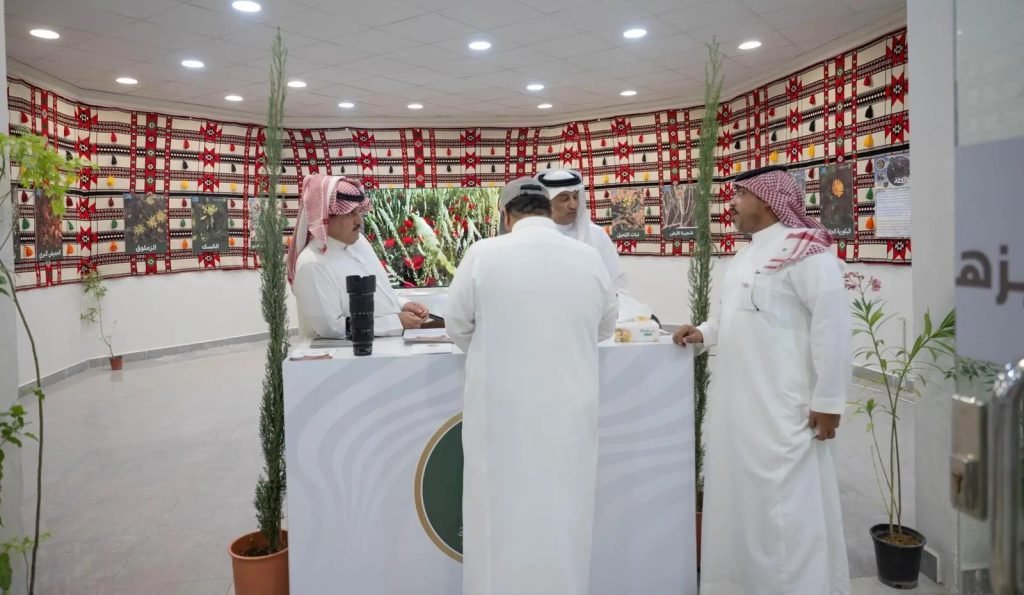
"Spring Exhibition" and wild plants
The "Spring Exhibition" corner displays local wild plants distinctive to the Northern Borders region, aiming to boost visitors' environmental knowledge and raise awareness of the importance of plant cover and ways to preserve it.
Al-Muleihiya dish: a taste of heritage
Among the season's highlights are live demonstrations of preparing the traditional "Al-Muleihiya" dish and a competition for the best Al-Muleihiya dish, with local families taking part amid notable public engagement.
Corner for productive families and craftspeople
The season also features stalls selling food and handmade crafts, direct support for small home-based projects, and live demonstrations of palm-frond weaving, textile weaving, embroidery, henna art and Arabic calligraphy.
Folk performances and a children's corner
Heritage performances and folk arts highlight the region's customs, alongside a dedicated children's corner offering educational and interactive activities inspired by the local environment, aimed at fostering identity and belonging from an early age.
Event goals
The event aims to highlight the local environment and its natural components, boost domestic tourism by capitalizing on the seasons, empower productive families and craftspeople and stimulate the local economy, and pass down folk heritage to new generations while protecting cultural identity.