
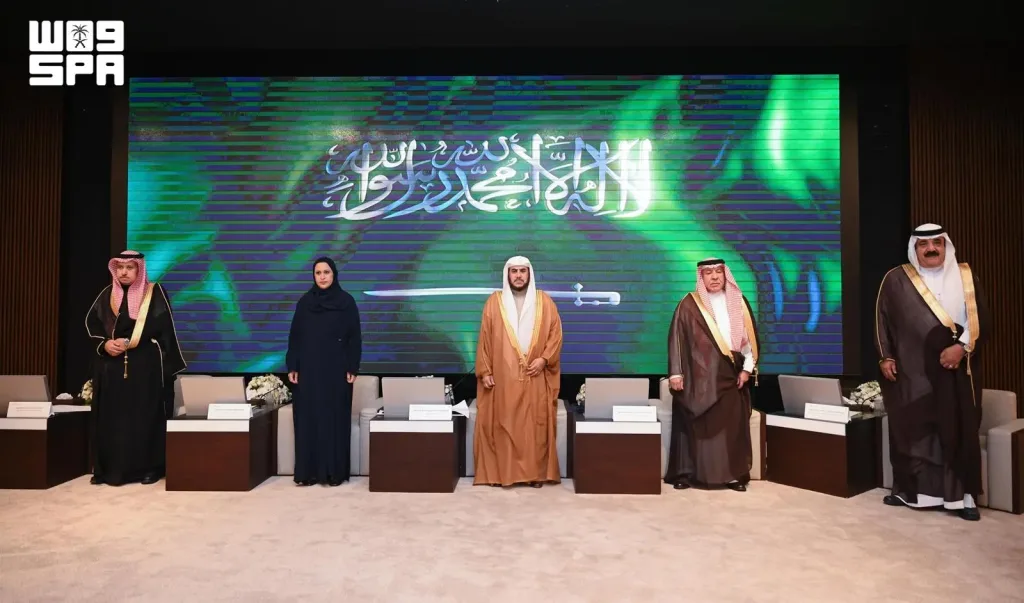
Riyadh Hosts International Tolerance Forum to Promote Coexistence and Combat Intolerance
Riyadh, Saudi Arabia – November 16, 2026
The King Abdulaziz Center for Cultural Communication organized the International Tolerance Forum 2026, titled “Deep Roots and Future Horizons,” in Riyadh on Monday, coinciding with the International Day for Tolerance.
The forum brought together scholars, intellectuals, researchers and specialists from Saudi Arabia and abroad to discuss tolerance, peaceful coexistence, cultural diversity and strategies for addressing intolerance and hate speech.
The event also highlighted Saudi Arabia's efforts to promote intercultural communication and strengthen social cohesion.
Promoting Tolerance as a Shared Human Value
Dr. Abdullah Al-Fawzan, Secretary-General of the King Abdulaziz Center for Cultural Communication, emphasized that tolerance is a fundamental human and civilizational value rooted in Islamic principles of justice, compassion, kindness and respect for differences.
He stressed the importance of strengthening these values amid growing global challenges related to intolerance and hate speech.
The forum sought to connect religious foundations, cultural heritage and national and international experiences with practical approaches to making tolerance a sustainable social and institutional practice.
Panel Discussion Explores the Future of Tolerance
A panel discussion titled “Deep Roots and Future Horizons” was moderated by Dr. Abdullah Al-Fawzan and featured leading figures from academic, religious, cultural and institutional backgrounds.
The session explored the historical, religious, social and technological dimensions of tolerance, emphasizing the importance of cooperation between institutions and communities.
Faisal bin Muammar Highlights Justice and Human Rights
Faisal bin Muammar, General Supervisor of the King Abdulaziz Public Library, examined the historical development of tolerance.
He emphasized that meaningful tolerance extends beyond slogans and must be reflected in justice, the protection of rights and everyday behavior.
He also highlighted the role of education, media and institutions in promoting mutual respect and understanding.
Religious Foundations of Respectful Disagreement
Sheikh Abdulbaqi bin Mohammed Al Sheikh Mubarak, a member of the Council of Senior Scholars, presented a paper titled “The Mercy of Differences.”
The presentation explored the religious foundations of tolerance and the Prophetic approach to managing differences.
He explained that legitimate differences in Islamic jurisprudence reflect flexibility and mercy, while tolerance involves respecting others without abandoning fundamental principles.
Uzbekistan Shares Its Cultural Experience
Dr. Firdavs Abdulkhaliqov, President of the Center of Islamic Civilization in Uzbekistan, discussed the country's historical traditions of tolerance.
He emphasized the importance of drawing on cultural heritage to promote peaceful coexistence, religious and cultural diversity, and dialogue between nations.
The Family's Role in Building Tolerance
Dr. Maimunah Al-Khalil, Secretary-General of the Family Affairs Council, highlighted the family's central role in developing tolerant attitudes.
She explained that respect, dialogue and acceptance of differences begin with everyday family interactions and positive parental examples.
She also called for coordinated efforts among educational, cultural and community institutions to address bullying and intolerance.
Artificial Intelligence and Responsible Digital Governance
Rashed Al-Sahli, Head of Legal Affairs and Governance at the Digital Cooperation Organization, discussed how digital transformation and artificial intelligence can support tolerance.
He warned that misinformation and algorithmic bias can reinforce stereotypes and contribute to social polarization.
He stressed the importance of responsible digital governance and respect for cultural diversity in technology development.
Strengthening Dialogue Across Cultures
The forum emphasized cooperation between families, educational institutions, cultural organizations and the wider community.
It also explored the role of international experiences and emerging technologies in supporting social cohesion and intercultural understanding.
Through the International Tolerance Forum, the King Abdulaziz Center for Cultural Communication continued its efforts to promote dialogue, respect and peaceful coexistence across communities.