
King Abdulaziz Camel Festival Draws Visitors From Across the World
Al-Sayahed, 7 Rajab 1447 AH (27 December 2025)
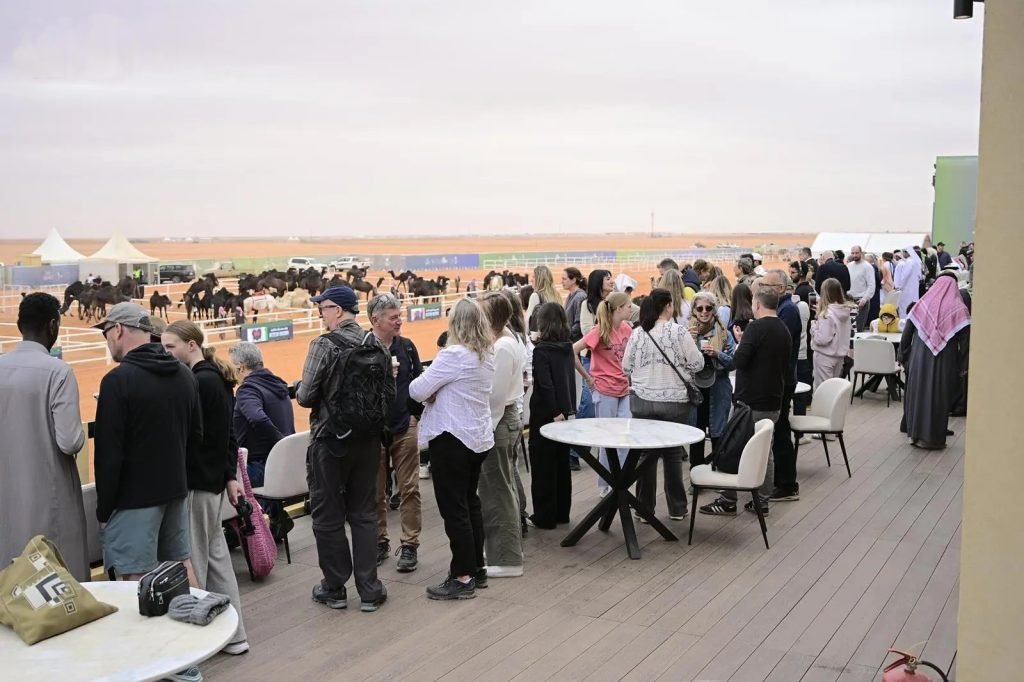
The tenth edition of the King Abdulaziz Camel Festival has seen a marked rise in the number of international tourists, an indicator reflecting the widening circle of global interest in the event and its growing standing as one of the region's most prominent cultural and heritage festivals, along with its role in supporting cultural tourism in the Kingdom.
According to figures from the organizing committees, the number of foreign tourists visiting exceeded 3,000, representing more than 50 countries across various continents, who came to see the world of camels up close and follow the festival's specialized competitions.
Visitors attended judging rounds in the individual and group camel categories, observing the precise evaluation mechanisms and criteria used to compare camels, giving them a deeper understanding of the cultural and economic value of camels and their deep-rooted place in the Kingdom's history.
Tourists also took part in a variety of cultural and entertainment programs designed to introduce them to camel breeds, colors and names, as well as highlight the heritage associated with them, through introductory shows and interactive experiences that were widely well received by visitors.
A number of foreign tourists expressed their admiration for the organization and warm welcome they experienced, affirming that the festival represents an open global carnival that brings together authenticity, entertainment and knowledge.
The growing international turnout reflects the King Abdulaziz Camel Festival's success in achieving its goals and strengthening its presence on the global tourism map, as a platform that brings together heritage, economy and tourism and helps project a bright image of the Kingdom and its culture to the world.
In its tenth edition, the festival continues to cement its standing as an attractive international destination, reinforcing its role in supporting cultural tourism and establishing the camel as a civilizational asset that transcends geography, moving steadily toward a future of greater global presence and impact.