
Sharara Sets Fastest Time at Crown Prince Camel Festival 2026 as Camel Deals Top SAR 60 Million
The Crown Prince Camel Festival 2026 kept up the pace both on the track and in the market around it. Sharara topped the morning session of the Jadha'a (General) category with the fastest time of the day, while the value of camel transfer deals struck on the festival's sidelines passed the SAR 60 million mark.
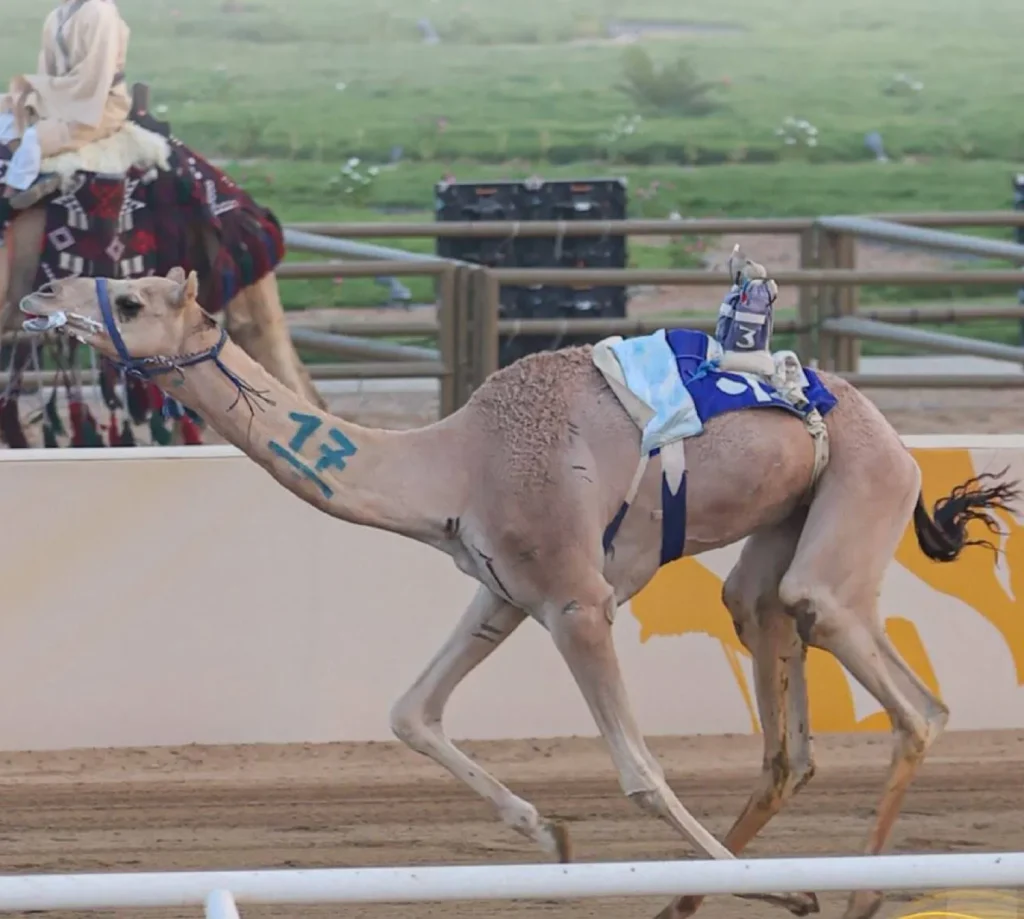
The Jadha'a morning session closed with a record 651 camels competing across 15 races of 5 kilometers each, with closely matched fields and a fierce fight for the top places.
Sharara, owned by Saeed Manana, set the fastest time in the ninth race, covering the distance in 7 minutes 42.063 seconds at a speed of 38.956 km/h to win the round and post the quickest time of the session.
The average time across the session was 8 minutes 17.469 seconds. The 15 race titles were shared among four Gulf countries: Saudi camels won seven, Emirati camels five, Qatari camels two and Kuwaiti camels one.
In the beauty (Mazayen) competitions, the individual Mafareed category for Asayel and Majaheem camels produced another close contest for the top places. Balsha Salem, owned by Saeed Al Marri, took first in the individual Mafareed Bikar round for Asayel camels, while Al Nawi, owned by Mubarak Duhaim Ubayyan Al Dossari, won the individual Mafareed Qa'dan round for Majaheem, and Hawashat Al Qa'ouda Hawashat, owned by Qatar's Ali Furaij, took first in the individual Mafareed Bikar round for Majaheem.
Away from the track, the festival saw brisk trading in the camel transfer market, with the total value of announced and unannounced deals exceeding SAR 60 million, according to participants and specialists at the festival.
The headline deal was Al Zaeem, winner of the Crown Prince Festival Cup in the Haqayiq category, which changed hands for SAR 3 million. Salateen Al Rifada sold for SAR 2 million, as did Waad, winner of the Saudi-bred race. Other notable deals included Muhimma at SAR 2 million, Al Jazi at SAR 1.5 million, Lahqa at SAR 1.1 million and Samha at SAR 1 million.
The trading activity underlines the festival's growing economic dimension alongside its sporting and heritage standing, as investment in racing camels rises and owners compete to strengthen their stables for the season ahead.

