
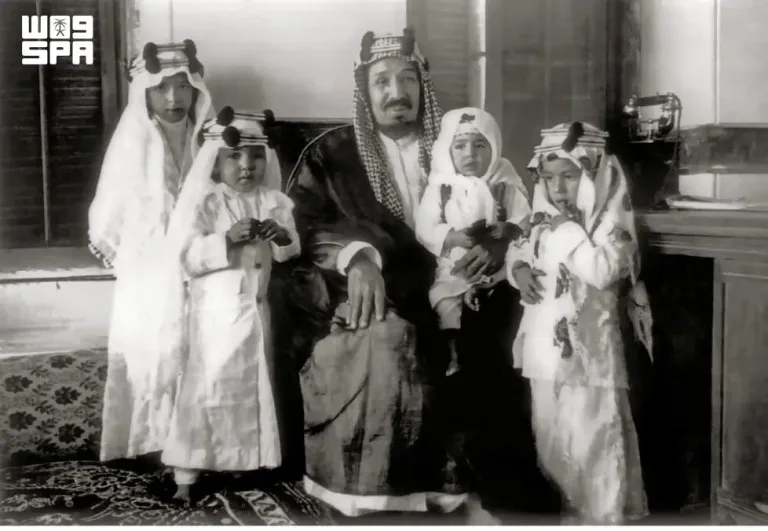
Historical Documents Highlight King Abdulaziz’s Approach to Education, Employee Rights and Community Welfare
A collection of historical documents and accounts presented by the King Abdulaziz Foundation for Research and Archives (Darah) in its Saudi National Day historical content guide sheds light on several aspects of the life and leadership of King Abdulaziz bin Abdulrahman Al Saud.
The records highlight his attention to education, the practical application of knowledge, employee rights, assistance for people in need, encouragement of students, and mechanisms that allowed members of society to submit complaints.
Together, the documents provide examples of administrative and social practices associated with managing state and community affairs during his reign.
Education and Turning Knowledge into Action
One of the accounts highlighted in the guide recalls King Abdulaziz attending a graduation ceremony for students of the Saudi Scientific Institute.
Addressing the graduates, he described them as the first outcome of an educational initiative designed to prepare an educated generation capable of serving their religion and country.
His remarks emphasized that knowledge gains its value through useful action, while also encouraging graduates to preserve their religion, language, and homeland and benefit from useful knowledge available elsewhere.
A 1936 Telegram Addressing Employees’ Conditions
The guide also features a document dating to 1355 AH / 1936, when wireless communications employees submitted a telegram describing the severe economic difficulties affecting them and their families.
After reviewing their complaint, King Abdulaziz instructed the Minister of Finance to examine their situation and address their needs, while extending consideration to other employees facing similar circumstances.
The document provides a historical example of how employee concerns were raised and addressed during that period.
Delivering Assistance to Those in Need
Other records highlighted King Abdulaziz’s instructions concerning financial and material assistance for people in need, including guidance intended to ensure support reached those considered most eligible.
The guide also notes that when traveling to Riyadh to receive annual allowances became difficult for some beneficiaries, King Abdulaziz instructed regional governors to arrange for those payments to reach recipients at locations of their choice.
“The Fragrance of Learners”
Another account describes an unannounced visit by King Abdulaziz to the Princes’ School in Riyadh.
During the visit, he noticed a large ink stain on the clothing of one of his sons, who attempted to hide it out of embarrassment. King Abdulaziz encouraged him, saying: “Do not hide it; this is the fragrance of learners.”
The story has been preserved as an example of his encouragement of students and appreciation for learning.
The Right to Submit Complaints
The guide also records that in 1372 AH / 1952, King Abdulaziz announced that individuals who believed they had suffered an injustice could submit complaints directly through telegram or free postal services at the state’s expense.
Postal and telegraph employees were instructed to accept complaints without delay, including those involving his sons, grandchildren, or other family members. Officials were also warned against preventing individuals from submitting complaints or pressuring them to withdraw their claims.
Published in connection with Saudi National Day, these historical records offer insight into aspects of education, public administration, employee welfare, social assistance, and access to grievance mechanisms during the reign of King Abdulaziz.