
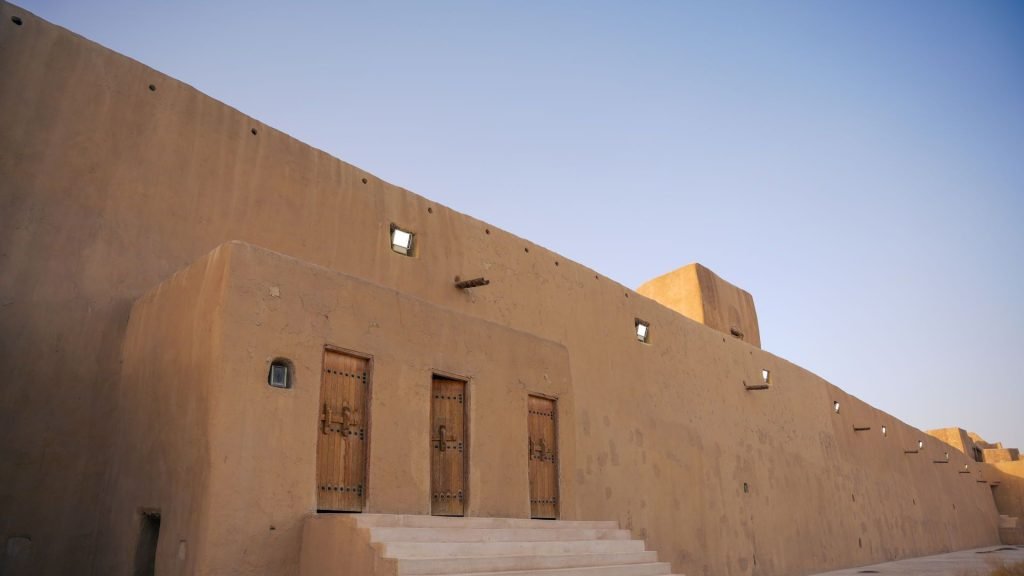
Sahoud Palace: The Ancient Fortress Guarding Al-Ahsa's History
An Architectural Masterpiece and an Impregnable Fortress
Al-Ahsa Governorate, whose history stretches back centuries before Christ, holds a rich and diverse civilizational legacy. As one of the fertile natural oases with a strategic location, Al-Ahsa was always a target for invaders, prompting its residents throughout the ages to build castles and palaces for protection. Sahoud Palace, one of these historical landmarks, stands as a symbol of resilience and pride in the face of various challenges.
An Architectural Masterpiece Amid a Natural Oasis
Construction of Sahoud Palace in Al-Ahsa began in 1790 and was completed in 1800. The palace takes its name from the large "Sahoud" cannon that was mounted on it. With its fortified design, seven circular watchtowers, and gates equipped with firing ports, the palace was an impregnable fortress protecting Al-Ahsa from raids and attacks.
A Journey Through Time Inside the Palace
Upon entering Sahoud Palace, visitors travel back in time, exploring its multiple interior rooms and the ancient mosque that testifies to the site's religious significance. The palace also contains a weapons vault and a deep water well ensuring sustainability during sieges, along with stables for the horses that were an integral part of its defenses.
Cultural and Historical Significance
Sahoud Palace is not just a military landmark — it is a witness to many historical events that shaped the region. Its beautiful architectural design and historical importance make it one of the most visited archaeological sites in Al-Ahsa, drawing history and architecture enthusiasts from around the world.