
International Forum on Non-Terrestrial Networks 2024: A Global Platform for the Future of Satellite Communications
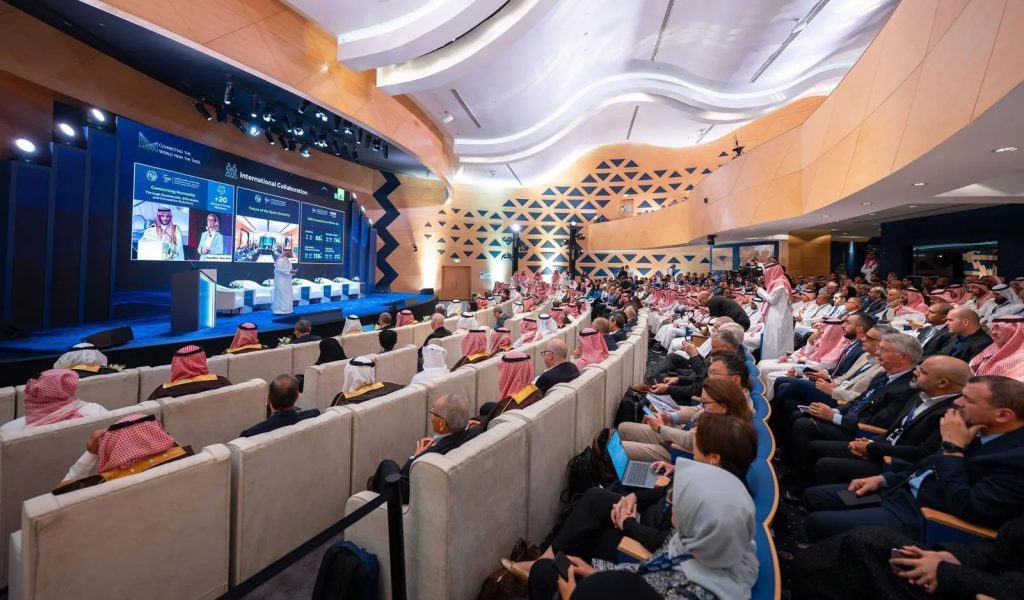
The International Forum on Non-Terrestrial Networks 2024 concluded today, organized by the Communications, Space and Technology Commission in partnership with the International Telecommunication Union (ITU). The two-day forum in Riyadh drew high-level international attendance, including ministers and senior officials from several countries, alongside leading executives and experts in communications and space.
Wide-Ranging International Participation
The forum brought together a distinguished lineup of attendees, including:
- 21 senior officials.
- 16 chief executives of global companies.
- 23 decision-makers and regulatory representatives.
- 82 international speakers from around the world.
Notable participants included:
- Saudi Minister of Communications and Information Technology Eng. Abdullah bin Amer Al-Swaha.
- Officials from Kuwait, Qatar, Bahrain, India, Brazil, and South Africa.
- Leaders from international organizations such as the UN Office for Outer Space Affairs.
Forum Themes: Shaping the Future of Satellite Communications
The forum opened with a presentation by Mario Maniewicz, director of the ITU's Radiocommunication Bureau, focused on preparations for the 2027 World Radiocommunication Conference (WRC-27) and its role in shaping the future of satellite communications.
Sessions covered key topics including:
- Direct-to-device (D2D) communications and their role in improving connectivity quality.
- Space sustainability through reducing space debris.
- Achieving equitable access to space resources via satellites.
- Strengthening connection stability and service reliability by improving bandwidth and reducing costs.
Notable Sessions and Technical Demonstrations
Key panel discussions:
- Eva Berneke, CEO of Eutelsat Group, stressed the importance of international cooperation in reducing space debris.
- Hamid Akhavan, CEO of Echostar, highlighted global connectivity technologies supporting vital sectors such as oil and energy.
- Ahmed Al-Khowaiter of Saudi Aramco shared the company's experience using satellites to provide wide-scale coverage.
Advanced technical demonstrations:
- A demonstration of direct device-to-device (D2D) communications, the first of its kind in the Middle East and North Africa.
- Four technical demonstrations showcasing the Kingdom's efforts to connect the unconnected and improve quality of life locally and globally.
The Kingdom's Vision: Leading the Future of Satellite Communications
The forum reaffirmed the Kingdom's commitment to supporting innovation and modern technologies in satellite communications, in line with Saudi Vision 2030. By harnessing its technical capabilities, the Kingdom aims to build an integrated communications system that supports sustainable development locally and globally.