
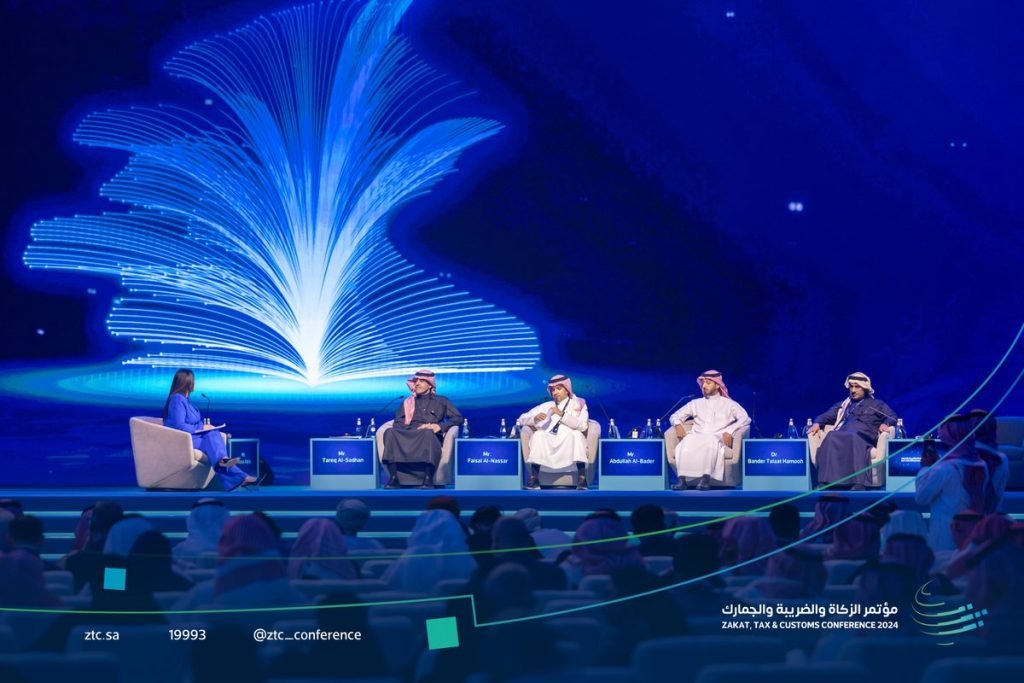
Zakat, Tax and Customs Conference closes in Riyadh with 11 agreements to boost international cooperation and economic growth
The third edition of the Zakat, Tax and Customs Conference concluded today, December 5, 2024, organized by the Zakat, Tax and Customs Authority under the theme "Charting the Future for a Sustainable Economy and Enhanced Security." The conference was held at the King Abdulaziz International Conference Center in Riyadh, under the patronage of Minister of Finance and Chairman of the Authority's Board Mohammed Al-Jadaan.
The conference saw the signing of 11 cooperation agreements, including eight international agreements with Croatia, Pakistan, Kuwait, Egypt, Bulgaria, Iceland, Kosovo and Morocco, along with three local agreements with the Board of Grievances, the General Authority for Health Prevention (Wiqaya), and the Council of Health Insurance (Daman). Additional agreements were also signed between participating entities to strengthen economic and technical integration.
In his opening remarks, the Minister of Finance stressed the importance of strengthening joint efforts to address tax and customs challenges, praising the authority's achievements, including scoring 99.35% in the UN's E-Government Digital Index. He pointed to the conference's role in harnessing technology and supporting bilateral trade through bilateral and international partnerships.
For his part, Authority Governor Engineer Suhail bin Mohammed Abanmy said the conference serves as a platform for unifying efforts toward more advanced zakat, tax and customs systems, stressing the importance of zakat policies in achieving social solidarity.
The conference featured high-level dialogue sessions with a select group of international experts, reviewing the latest innovations and solutions in zakat, tax and customs. Seventy-two workshops were also held, covering issues such as digital transformation, economic security and sustainable growth strategies.
The accompanying exhibition featured 90 local and international entities, providing a platform for exchanging ideas and innovations. The conference drew broad attendance from officials and experts worldwide, with discussions focused on the future of zakat, tax and customs policies amid digital transformation, in line with Saudi Vision 2030.