
Tabuk's Honey and Agricultural Products Festival 2025 Draws Big Crowds With a Mix of Education, Marketing and Fun
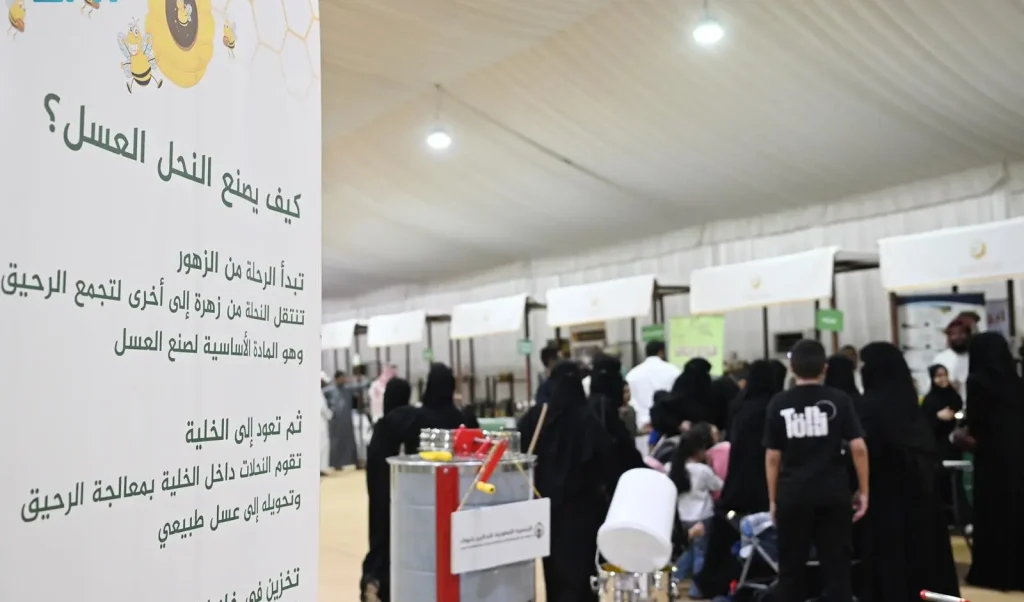
Tabuk | 2 August 2025. The third Honey and Agricultural Products Festival in Tabuk region continues its activities amid a notable public turnout of residents, visitors and expatriates who flocked to Prince Fahd bin Sultan Park for an integrated experience combining agricultural education, shopping and family entertainment.
The festival is organized by the Tabuk branch of the Ministry of Environment, Water and Agriculture, with more than 45 pavilions for beekeepers, farmers, and government and community bodies, running over five consecutive days to form a quality platform for showcasing the region's distinctive agricultural products, chiefly moringa honey and wildflower honey, both known for their high quality and nutritional value.
The exhibition also includes dedicated pavilions for olives and olive products, and processed food items representing the creativity of productive families and local entrepreneurs, who found in the event an opportunity to showcase their products to a wide audience and open new marketing horizons.
The ministry branch's director general, Engineer Amjad bin Abdullah Thallab, explained that the festival forms a strategic platform for strengthening cooperation between producers and supporting bodies in the public and private sectors, in line with Saudi Vision 2030's support for local products and national food security.
He affirmed that the festival helps stimulate innovation in agricultural and beekeeping techniques and encourages the exchange of expertise between participants, raising production quality and contributing to the sustainability of the region's agricultural sector.
The festival is distinguished by its smart layout, which lets visitors move seamlessly between pavilions, with dedicated entertainment and awareness spaces for children, offering a comprehensive family experience that boosts community awareness of the importance of agriculture and beekeeping while linking entertainment with knowledge.
The third edition highlights Tabuk's status as a pivotal agricultural hub in the Kingdom, thanks to its environmental diversity, fertile soil and favorable climate, alongside continuous government support for farmers that has helped the region's products gain recognition locally and internationally.