
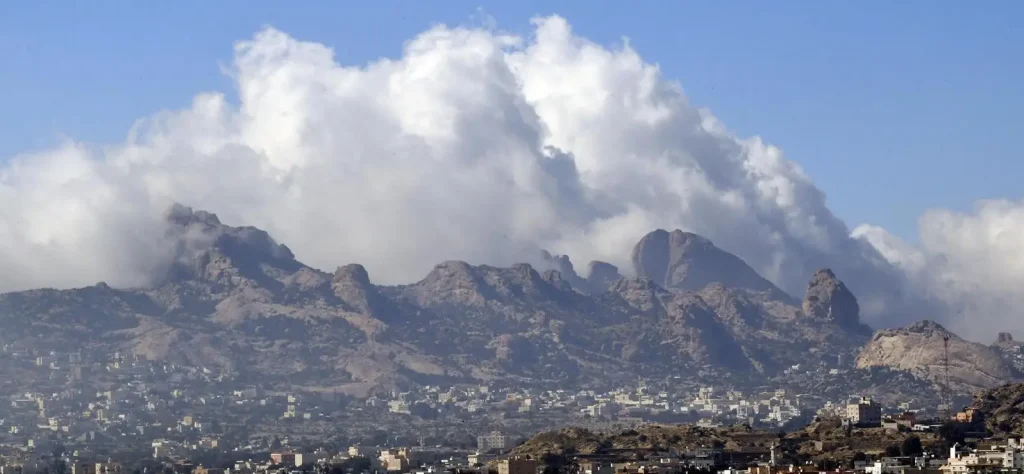
The Mountains of Tanumah: A Geological and Tourism Treasure Rich in Natural Beauty and the History of the Yemeni Pilgrim Route
ABHA, 20 August 2025 — Tanumah governorate, located north of Asir region some 150 kilometers from Abha, stands as one of the Kingdom's foremost geological tourism destinations, thanks to its stunning natural formations and unique environmental diversity, making it a magnet for nature lovers, explorers and earth-science enthusiasts.
Dr. Abdullah Mohammed Al-Omari, supervisor of the Seismic Studies Center at King Saud University and chairman of the board of the Saudi Society for Earth Sciences, affirms that Tanumah represents a rich natural reserve as part of the Sarawat mountain range, noting that it abounds in towering peaks and deep valleys that give the area a rare geological character.
Tanumah's geographic territory extends from north to south over a width of about 25 kilometers, and from east to west over a length reaching 80 kilometers, encompassing numerous mountain heights such as Jabal Mana'a, Ikran, Al-Jarda, Al-Farsh, Lanbush and Ghulama, alongside a western mountain chain that includes Atan, Al-Manama, Abdullah, Jalala, Al-Fitam, Al-Qadiya, Al-Ta'ifa, Al-Hamam, the Al Sawdah mountains, and Muma.
Among Tanumah's most prominent natural landmarks are the Did mountains, a rugged range known for its towering peaks and treacherous trails, which only local residents who have inherited generations of experience can navigate with skill. Its highest peak is known as Jabal Tala, surrounded by villages such as Atmah, Tarta', Aliyat Sayyarah, Zuqaq and Al-Batn.
Jabal Ikran, meanwhile, is considered one of Tanumah's most iconic geological landmarks, distinguished by its massive rock formations and its large cave overlooking the west, as well as its waterfalls that burst from its summit during the summer rainy season, transforming the area into a green natural canvas that captivates visitors.
Alongside their natural riches, the mountains of Tanumah carry a rich historical legacy, having sat along the route of the Yemeni pilgrim road, which made them an important station for trade exchange with pilgrims, particularly in foodstuffs and basic goods, in addition to hosting promising indicators of the presence of precious minerals.
Together, these assets make Tanumah a key pillar in Saudi Vision 2030's plans to develop geological tourism and reinforce the Kingdom's standing as a global destination for nature and geology enthusiasts.