
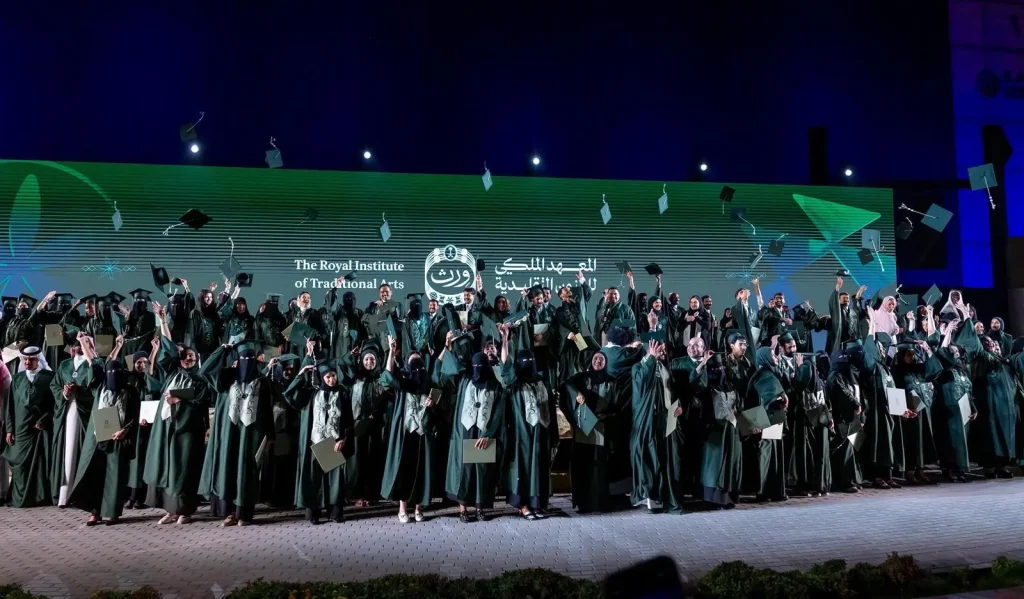
Royal Institute for Traditional Arts "Wirth" Celebrates First Graduating Class in Riyadh
Riyadh – September 14, 2025 (22 Rabi al-Awwal 1447 AH)
The Saudi capital Riyadh witnessed a historic moment yesterday in the journey of the Royal Institute for Traditional Arts "Wirth," celebrating its first graduating class at a ceremony held at the Innovation Garden at King Abdulaziz City for Science and Technology, attended by royal highnesses, senior officials and a host of cultural and artistic figures.
The institute celebrated the graduation of 101 male and female students from its various educational and training programs, which cover a wide range of traditional arts, most notably: traditional mud-brick building, Najdi door-making, traditional weaving (Sadu), the Hasawi bisht, traditional ornamentation, product development, and digital heritage.
At a Glance
- Official remarks: Deputy Minister of Culture Hamed bin Mohammed Fayez delivered a speech on behalf of Prince Badr bin Abdullah bin Farhan, Minister of Culture and chairman of the institute's board of trustees, calling the graduation a pivotal step in empowering national talent and reflecting the Kingdom's drive toward an integrated cultural industry that presents traditional arts through a contemporary lens.
- Institute CEO's remarks: Dr. Suzan Al-Yahya said the milestone reflects years of dedicated work and knowledge-building, describing the graduates as "ambassadors of traditional arts" who will carry them forward to future generations with renewed creative spirit.
The graduation ceremony comes as part of the institute's strategic initiatives, which aim to advance education, training, documentation and empowerment; highlight national identity and elevate the standing of traditional arts; connect the past with the present through specialized educational programs; and contribute to achieving the goals of Saudi Vision 2030 in the cultural sector.
The Wirth Institute stands as a leading reference for preserving and reviving Saudi traditional arts, supporting artisans and practitioners, honoring these "living treasures," and encouraging talented individuals to learn, master and develop these arts in ways that reflect the richness and authenticity of Saudi culture locally and internationally.