
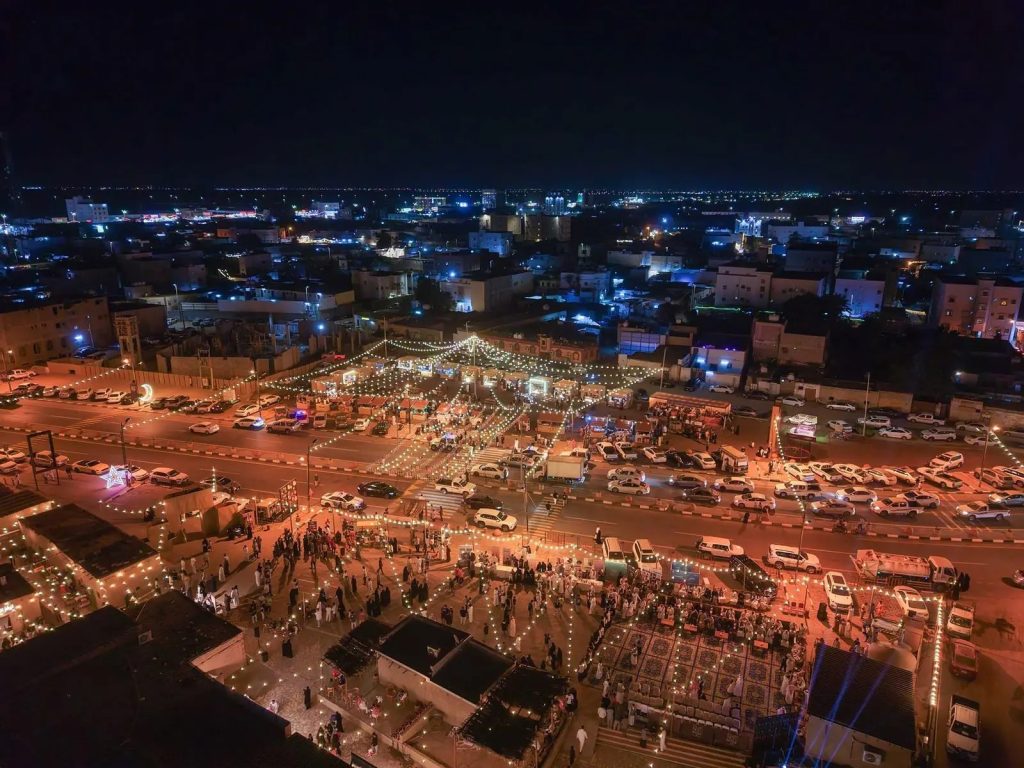
Ramadan in Jazan, Past and Present: A Spiritual Tale Renewed in the Memory of the Place
Jazan, 7 Ramadan 1447 AH (24 February 2026)
In Jazan, Ramadan does not arrive as a passing guest. It returns as an old tale renewed each year, beginning in the dusty alleys and reaching hearts that still hold the details of a beautiful time, when simplicity was a way of life and the holy month was warmer and closer to the soul.
Ramadan in old Jazan was not a season of display but a time of clarity. The days began to the rhythm of work in the fields and markets, then life quietened as sunset approached and everyone returned home carrying the longing to gather around the iftar table, in a scene reflecting the spirit of the family and the cohesion of the community.
The houses were modest but full of love, and the tables held few dishes but were rich in blessing. The Ramadan table was adorned with traditional dishes such as aseeda, haisiya and marsa, foods that carry the spirit of the land and reflect the region's identity. Yet the beauty of the table lay not only in the food but in gathering around it, where prayers united and hearts drew closer in a moment that summed up the meaning of Ramadan.
At sunset the mosques filled with worshippers and the verses of the Quran echoed all around, while families waited for the sound of the iftar cannon fired from the city of Jazan and the region's main governorates such as Sabya and Abu Arish. The cannon was not merely an announcement of maghrib. It was part of the memory of the place, a sound that brought joy to the hearts of children who rushed to tell their families that iftar had come.
After the Isha prayer the night gatherings began, with men meeting in the squares and families sitting in front of their homes exchanging conversation and memories in an atmosphere of social warmth. Deep in the night, the elders took turns waking the sleeping for suhoor, to three cannon shots fired at short intervals, followed by activity in the homes to prepare "thareed", made of corn, milk and ghee, sometimes with a sprinkling of sugar to taste.
In the Ramadan of yesterday, Jazan was one family. Doors were open, dishes passed between neighbors, and solidarity was present in its simplest forms, so that no one slept hungry and no one felt alone. The holy month was an occasion to strengthen the bonds of neighborhood and kinship and renew the meanings of solidarity and compassion.
Life has changed today. Food has multiplied and the pace has quickened, but Ramadan in Jazan still carries something of its past, a spirit not seen by the eye but felt by the heart. There are still homes that keep the customs, and voices of prayer like those raised decades ago, as if time could not strip the place of its memory.
Jazan is not merely a city but a story renewed every Ramadan, told in homes and living in the memory of those who lived those days. Ramadan in Jazan as the grandparents lived it was not days that passed but a life lived in its details, and a simple lesson that true beauty lies not in how much we own but in the depth of what we feel.
At a Glance
- Traditional Ramadan dishes: aseeda, haisiya, marsa
- The iftar cannon is part of Ramadan memory in Jazan, Sabya and Abu Arish
- Family night gatherings strengthen social bonds
- Some Ramadan customs endure despite changing lifestyles