
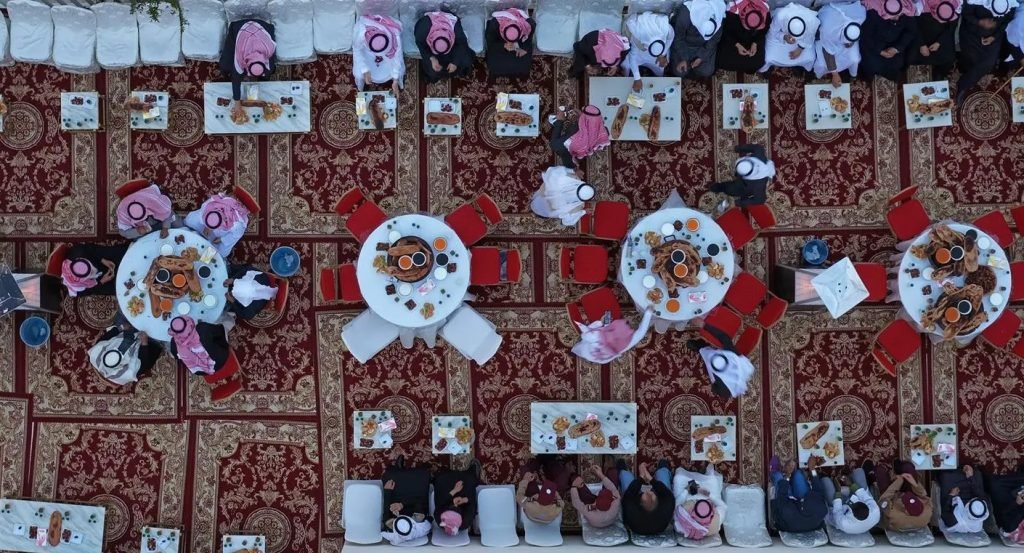
Ramadan Initiatives in Aseer Revive Communal Iftar Inside Historic Castles and Strengthen Community Bonds
Abha, 15 Ramadan 1447 AH (4 March 2026)
With the arrival of the holy month of Ramadan, the neighborhoods of the Aseer region are once again seeing the scenes of harmony for which the old majlis gatherings were known, as the community revives the custom of communal iftar in squares, neighborhoods and historic castles, in a picture reflecting the depth of social bonds and the warmth of relations among neighbors, amid growing community activity that strengthens the presence of heritage in daily life.
This growing revival follows the launch of the Ajaweed 4 initiative by the Governor of Aseer, which has encouraged local communities to recover the spirit of solidarity and compassion and revive the Ramadan heritage that once gathered young and old around one table shared by families with love and cooperation, in a scene that evokes the simplicity of the past and confirms the deep roots of authentic social values in the Aseeri community.
Al Thabit Castle: The Memory of Ramadan Comes Back to Life
The historic Al Thabit Castle in Al Mawain Center, about 50 kilometers north of Abha, hosted a Ramadan initiative organized by the center's residents within the culture and heritage track, bringing elders and young people together in a historic site that evokes the features of Ramadan in the past and strengthens the generations' bond with their authentic heritage.
The initiative featured a display of the traditional foods once served during the holy month, such as dates, wheat, ghee and butter made from sheep and cows, along with a presentation of how they were prepared and their importance as a main source of food at the time, in a scene that recalled the simplicity of life and the community's solidarity in providing for its needs.
A Heritage Museum Documenting Old Life
The accompanying heritage museum displayed the elements of daily life in the past, including plowing and watering tools, old dress for men and women, and ornaments, a living visual reference introducing young generations to the struggle and giving of their fathers and grandfathers.
Citizen Misfer bin Saad Al Hamed said preserving and reviving customs and traditions through such initiatives is a community duty that strengthens national identity and encourages young people to attend, take part and learn the history of their fathers and grandfathers, so that the legacy continues across generations.
He also recalled the building of the historic castles, noting the cooperation among the village's residents in building houses in the past, a picture reflecting the spirit of community solidarity, and called for preserving and rebuilding what remains of the old houses and caring for the farms and local production that once provided the livelihood of their forefathers.
Initiatives Beyond Heritage
Initiative founder Mishabbab Al Thabit said holding the event within Ajaweed 4 had a profound effect on attendees, offering a chance to host every segment of the community, activate social solidarity and introduce the generations to the hardship their forefathers endured and the development and prosperity the country now enjoys across every field.
Abdullah Ahmed Shaflout, leader of the initiative at the center, said the Ramadan initiatives were not confined to cultural, social and heritage aspects but included medical, environmental and awareness initiatives that brought the center's leading residents together to offer quality community services to the center's people and neighboring villages.
These initiatives are a living model of connecting past and present and strengthening the presence of culture and heritage in Ramadan events, safeguarding folk heritage and instilling the values of cooperation and harmony among members of the community in the Aseer region.