
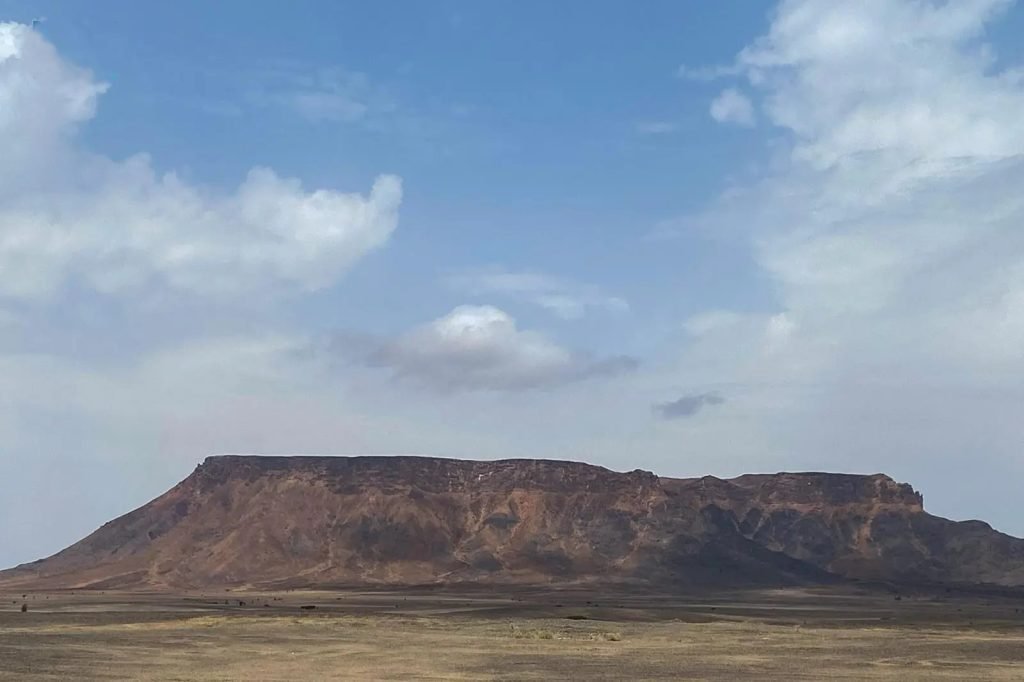
Mount Tamiya: A Natural Wonder in Qassim Where Legend Meets Ecotourism
Mount Tamiya stands out as one of the most prominent natural landmarks in the Qassim region, combining tourism appeal and geographic diversity with a deep presence in folk heritage, making it a favorite destination for nature and adventure lovers in the Kingdom.
The mountain lies northwest of Qassim within Uqlat Al Suqur Governorate, about 30 kilometers away, near the vital road linking Qassim with Madinah, a strategic location that makes it easy to reach and adds to its appeal for visitors and travelers.
Mount Tamiya is distinguished by its unique formation, a striking conical shape with a near-rectangular summit rising to around 1,300 meters above sea level and spanning roughly 7,000 square meters, giving visitors a distinctive panoramic view of the surrounding desert. Desert truffles are believed to grow in its vicinity, adding to its environmental value.
Despite common belief, the mountain is not volcanic but a natural formation. It is often confused with the nearby Al Wahbah Crater, which is a dormant volcanic crater, adding an intriguing scientific dimension to the geology of the area.
The mountain holds a special place in folk memory, linked to a number of tales and legends passed down through generations, making it part of the region's cultural identity and a source of inspiration for stories and folk proverbs.
The area around Mount Tamiya turns into a stunning natural canvas in spring, when wild plants flourish after the rains and the region's biodiversity comes into view, making it an ideal setting for camping and desert trips as well as hiking and photography.
Today the mountain is one of Qassim's leading natural tourism destinations, attracting visitors from inside and outside the Kingdom, especially in the milder seasons, amid growing interest in ecotourism and nature experiences.
Preserving this natural landmark within a framework of sustainable tourism development is essential to making the most of its unique assets, protecting its environment and strengthening its role in supporting domestic tourism, in line with Saudi Vision 2030.