
Saudi Arabia, UNESCO, and ICAIRE Issue Joint Statement in Riyadh to Enhance International Cooperation on AI Development
The Kingdom of Saudi Arabia, UNESCO, and the International Center for AI Research and Ethics (ICAIRE) have called for expanding international cooperation to ensure the development, deployment, and use of AI technologies in an ethical, safe, and sustainable manner, for the benefit of humanity and the protection of human rights and dignity.
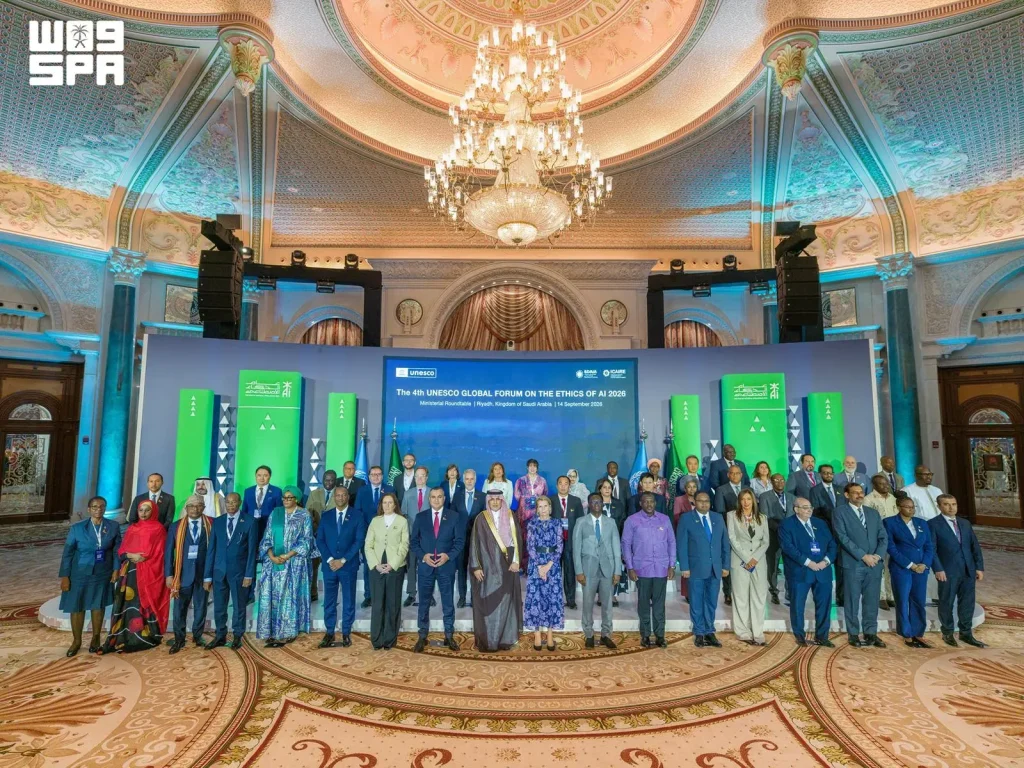
This came in a joint international statement issued on Tuesday, September 15, 2026, in Riyadh, following a closed ministerial meeting held as part of the fourth edition of the UNESCO World Artificial Intelligence Ethics Forum, which is being hosted by the Kingdom from September 14-17 under the theme “International Cooperation for Responsible AI”.
The meeting saw the participation of over 60 ministers and international representatives, with Saudi Arabia being represented by the President of the Saudi Data and Artificial Intelligence Authority (SDAYA) and the ICAIRE Board of Directors, Dr. Abdullah bin Sharif Al-Ghamdi, and UNESCO by its Deputy Director-General, Asa Renier.
The statement emphasized the need to enhance coordination among countries to address the opportunities and challenges arising from the rapid development of AI, and to work towards directing this technology towards supporting sustainable development, human well-being, and the public interest.
The participants highlighted the importance of continuing to follow UNESCO's 2021 Guidelines on AI Ethics as a global framework for guiding the development and use of technology in a way that protects human rights and fundamental freedoms and promotes inclusivity and sustainability.
The statement also commended UNESCO's practical tools in governance, including the Readiness Assessment Methodology (RAM) and Ethical Impact Assessment (EIA), and called for expanding their use in the preparation of national strategies and AI policies, taking into account the differences between countries in terms of capabilities, priorities, and cultural and linguistic diversity.
Reducing the Global AI Gap
A key issue addressed in the Riyadh Statement was the need to reduce the gaps between countries in accessing AI technologies and the necessary infrastructure, with a greater focus on the needs of developing countries, particularly African nations.
The participants stressed the importance of engaging different segments of society in shaping the future of the technology and its governance, especially women and youth, and enhancing dialogue between cultures and exchanging knowledge and experiences among countries.
The statement affirmed that developing digital infrastructure, institutional capacity, and human skills is a key element in achieving the safe and responsible use of AI, alongside strengthening cooperation between governments, international organizations, universities, the private sector, and civil society.
Responsible Innovation and Protecting Children and Youth
The statement called for not separating the encouragement of innovation from addressing the potential risks of new technologies, with the need to build governance frameworks that achieve both economic and social benefits from AI while protecting human rights and dignity.
The statement also highlighted the importance of raising awareness and knowledge of AI among children and youth, enabling their participation in discussions related to its governance, while putting in place safeguards that ensure their rights and safety in the digital environment.
The statement reflects one of the key outcomes of the Riyadh Forum, amid international efforts to move from general principles of AI ethics to implementable policies and regulatory frameworks, allowing countries to benefit from the technology in a more responsible, inclusive, and sustainable manner.
