
King Abdulaziz Public Library Houses Treasures of Rare Qurans Reflecting the Beauty of Islamic Art Through the Ages
At a Glance
- Location: Riyadh – King Abdulaziz Public Library
- Date: 10 Shawwal 1446 AH / April 8, 2025
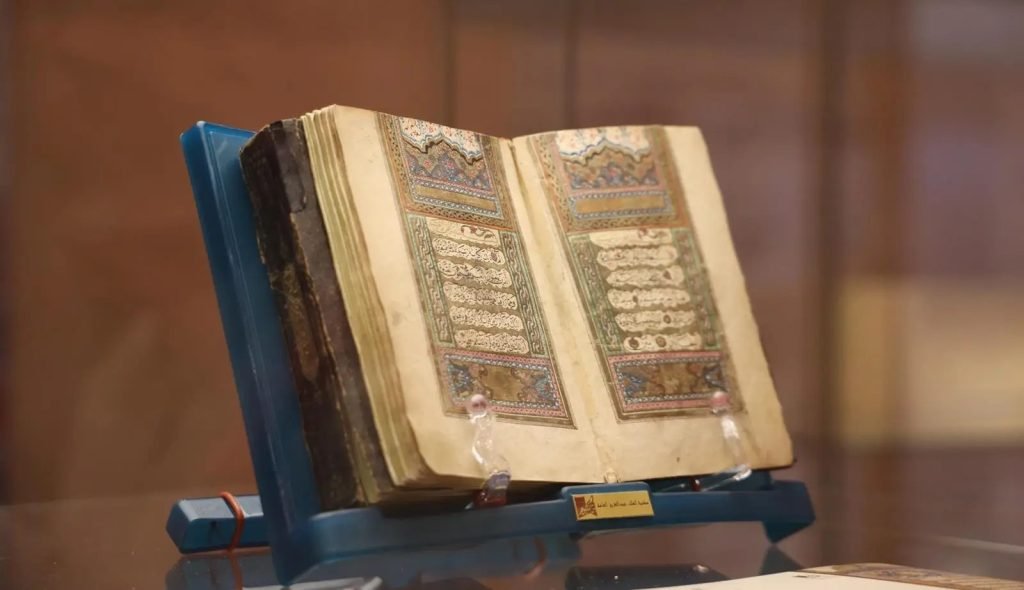
As part of its cultural and research mission, the King Abdulaziz Public Library continues to enrich its heritage collection by acquiring a rare group of holy Qurans, among the most precious Islamic artifacts in the world. The library holds more than 400 rare Qurans dating from the 10th to the 13th century AH, offering a striking view of the depth and evolution of Islamic art across the ages.
These Qurans stand out for their diversity of calligraphy and ornamentation styles, combining Kufic, Naskh, Thuluth, Timbuktu and other Islamic calligraphic styles associated with different regions such as the Levant, Iraq, Yemen, Egypt, India, China, Morocco and Andalusia. They vividly illustrate the skill of Muslim artists in blending spiritual and artistic beauty, with pages adorned in gold and plant- and geometric-inspired colors drawn from the rich Islamic environment.
The library holds rare examples including a scroll-form Quran measuring 642.5 centimeters, a complete Quran written facing the Kaaba during Ramadan in 1025 AH, and the Sultan's Quran, written in gold ink by calligrapher Mohammed Sharif Afshar in 1270 AH — all rich in intricate decorative detail and brilliant colors drawn from turquoise stone and gold ink.
Among the other notable holdings are Qurans that include the exegesis “Jawahir Al-Tafsir li-Tuhfat Al-Amir,” artfully divided into verses, commentary and ornamentation, highlighting the harmony between the sacred text and decorative art. The collection also includes “mirror-style” Qurans, in which the words on the first and last lines mirror each other, reflecting an advanced level of skill in calligraphy and ornamentation.
This rich collection shows how every region of the Islamic world contributed to shaping the visual identity of the holy Quran, turning each copy into a complete work of art expressing the spirituality of the text and the richness of Islamic civilization.