
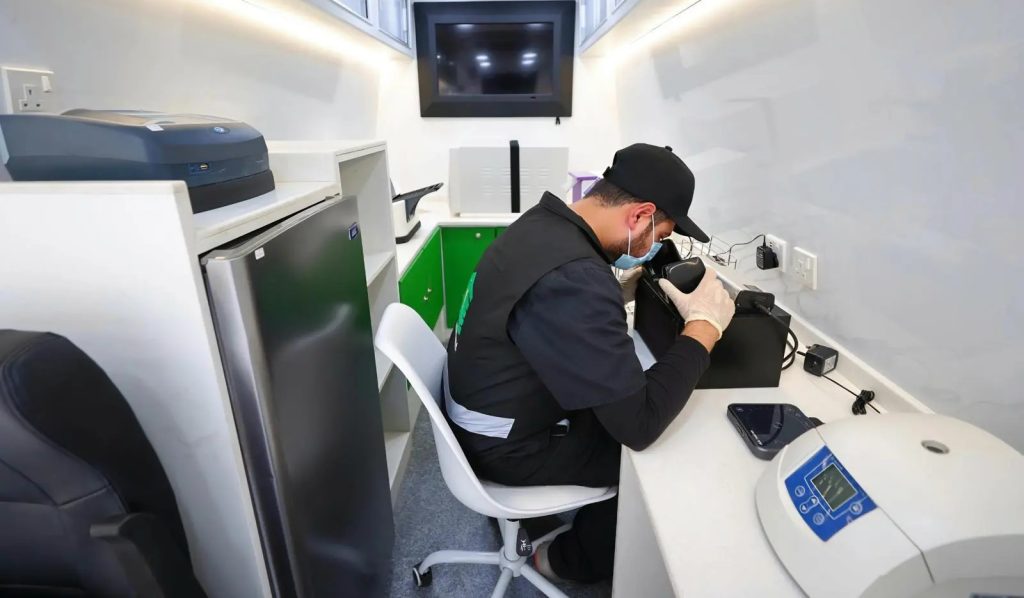
Makkah Municipality Deploys Advanced Electronic Systems to Monitor Food Safety, Analysing 1,300 Samples a Day During Hajj 1446H
Makkah, June 1, 2025 (5 Dhu al-Hijjah 1446H) — As part of its efforts to strengthen food safety during the 1446H Hajj season, the Holy Capital Municipality has announced the operation of a network of food and water testing laboratories that rely on advanced electronic systems and operate to the highest technical specifications, to ensure the quality of food and water provided to pilgrims.
The network consists of five laboratories, including one main central laboratory alongside mobile labs distributed across key sites in Makkah. The labs have a combined analytical capacity of around 1,300 samples a day, covering food and water samples drawn from markets, restaurants and various catering sites.
The municipality explained that the laboratory system operates through an integrated electronic platform linked to food establishment licences, with samples registered electronically and assigned a unique serial number to protect privacy and speed up processing, without any human intervention during the analysis stages — raising the level of accuracy and reliability.
The smart system enables the issuance of instant reports detailing the number of non-compliant samples, common types of contaminants and the food categories most prone to contamination, helping trigger urgent field measures such as confiscating unsafe products and immediately addressing potential sources of risk.
The municipality said this technical system is backed by specialised field teams working around the clock, conducting inspection rounds of markets, restaurants, catering contractors and sales outlets, with samples drawn randomly and regularly for immediate analysis to safeguard consumer safety.
These initiatives form part of the municipality's seasonal operational plan to serve pilgrims through comprehensive, precise and integrated food monitoring, aiming to guarantee a safe food environment befitting Makkah's status, in line with the goals of Saudi Vision 2030 to elevate municipal and health services provided to pilgrims.