
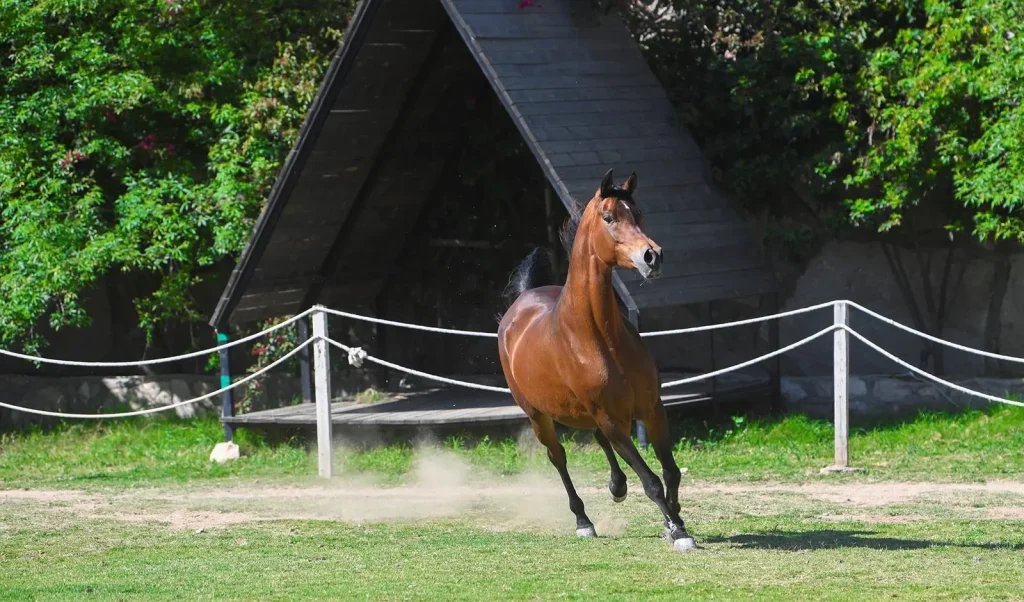
Purebred Arabian Horses: A Renewed Passion Among Taif's Youth and an Inherited Legacy in the Shafa Mountains
Taif, 5 Muharram 1447H, corresponding to 30 June 2025. Purebred Arabian horses continue to draw enthusiasts of all ages in Taif governorate, especially young people and those interested in heritage and equestrianism, with the stables scattered across the highlands of the Shafa mountains seeing growing interest in breeding these horses, which represent a symbol of authenticity and deep-rooted cultural heritage.
Amid growing support from relevant bodies and community culture, horse owners in Taif are keen on developing methods for caring for purebred bloodlines and preserving the purity of the breeds, affirming that the Arabian horse is not merely a hobby but an inseparable part of the Arabian Peninsula's identity and its Islamic and Arab history.
Experts: Taif Helps Position the Kingdom as a Global Leader in Purebred Horse Breeding
Dr. Fawzia Al-Salmi, professor of zoology at the University of Taif, said Arabian horses, whose roots trace back to the Arabian Peninsula, retain pure genetics that constitute a national treasure, adding that the Kingdom is moving confidently toward global excellence in registering purebred foal births, reflecting Saudi Vision 2030's support for preserving heritage.
Taif's Youth Carry the Torch
Young breeder Marwan Al-Omari spoke of his continued passion for raising purebred Arabian horses in his stables in the Shafa mountains, explaining that preserving bloodline purity is a top priority for every breeder keen on quality and reputation, noting that the climate in the Taif highlands is ideal for this type of breeding.
A Poetic and Cultural Legacy
On the cultural side, Dr. Talal Al-Thaqafi, faculty member at the University of Taif and cultural critic, noted that the horse has long been a symbol of courage, beauty and nobility, citing its frequent appearance in literary and poetic texts, quoting the saying: "Goodness is tied to the forelocks of horses until the Day of Judgment, and it is one of the pillars of Arab cultural identity."