
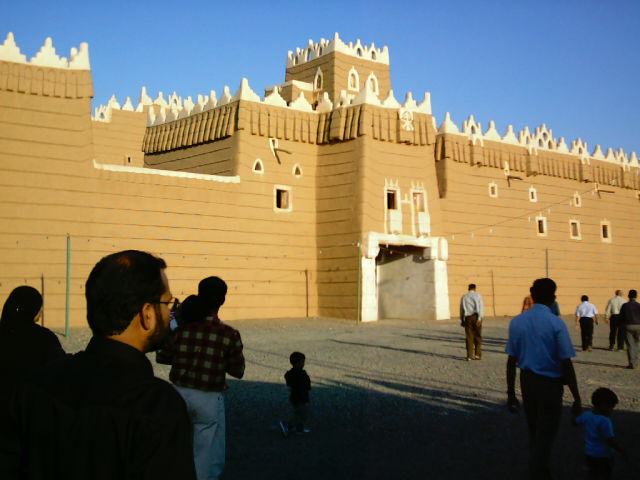
Historic Emirate Palace in Najran Reflects Key Stages in Saudi Arabia’s National Journey
As Saudi National Day approaches, attention turns to historic landmarks that have witnessed important stages in the Kingdom’s development and national journey. Among them is the Historic Emirate Palace in Najran, one of the region’s most prominent architectural landmarks and a lasting symbol of its administrative and cultural heritage.
Located in the heart of Najran’s old city, Aba Al-Saud, the palace was built in 1363 AH on an area of approximately 6,252 square meters. It served as the headquarters of the Emirate and several government departments during a period of significant administrative and developmental transformation in Najran.
Three Floors and Watchtowers
The Historic Emirate Palace consists of three floors containing numerous rooms and facilities. Its architectural features include an old well, circular towers positioned at its four corners, and watchtowers that reflect the functional and architectural characteristics of buildings from that period.
Beyond its architectural significance, the palace played an important administrative role and witnessed key stages in Najran’s development as government institutions expanded and the region underwent successive transformations.
Traditional Najrani Architecture
The palace was designed in accordance with Najran’s traditional architectural style, using locally sourced materials such as mud, stone, and palm trunks. These elements reflect the region’s distinctive architectural heritage and have helped preserve the building’s historic identity.
Its location within Najran’s historic urban district, surrounded by traditional markets and heritage buildings, has also enhanced its cultural and tourism significance. Today, the palace provides visitors and younger generations with an opportunity to explore aspects of Najran’s history and architectural heritage.
As Saudi Arabia celebrates its National Day, landmarks such as the Historic Emirate Palace serve as tangible connections between the Kingdom’s past and present, preserving stories of national development while strengthening appreciation for the country’s cultural heritage.