

World Population Day: Origins, Population Trends and the UN's Role
Background
World Population Day was established by the Governing Council of the United Nations Development Programme in 1989 to highlight the importance of population issues. The occasion grew out of the heightened interest that followed the world's population reaching five billion in 1987.
In its resolution 45/216 of December 1990, the General Assembly decided to continue observing World Population Day to raise awareness of population issues and their relationship to the environment and development.
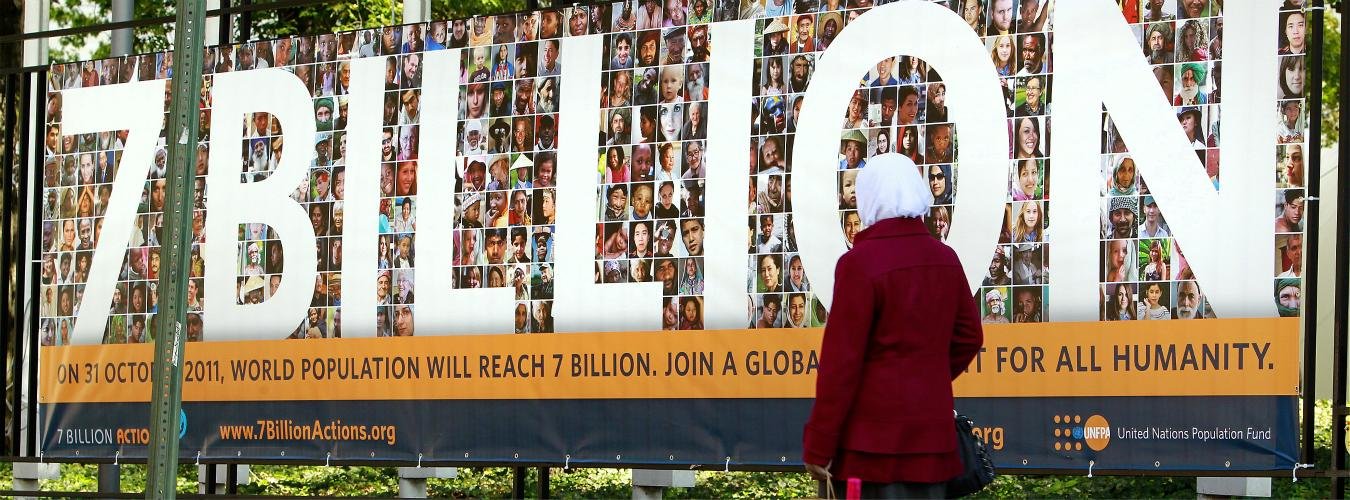
The day was first observed in July 1990 in more than 90 countries. Since then, the Fund's country offices and other organizations and institutions, in partnership with governments and civil society, have marked this important day to raise awareness of population issues, improve people's lives and promote sustainable development.
Population Trends
Current statistics show that the world's population is growing steadily, with roughly 83 million people added every year. Even if fertility rates decline, the world's population is expected to reach 8.6 billion in 2030, 9.8 billion in 2050 and 11.2 billion in 2100, according to medium-variant projections.
This large increase poses a major challenge for the world. Managing such a large population requires considerable effort from governments and international organizations to provide what is needed to meet people's basic needs, such as food, water, housing, health care, education and work.
The biggest challenge is securing enough resources to meet the needs of a growing population, especially in developing countries that lack resources and infrastructure. This can be achieved, however, by promoting sustainable development, planning for the efficient use of available resources, and strengthening international cooperation to share knowledge and expertise.
The United Nations and Population Issues
The Population Division works closely with the agencies, funds, programs and bodies of the UN system to implement the Programme of Action on population and to follow up on the International Conference on Population and Development. The Division also regularly advises UN missions, national government offices, UN offices, researchers, the media and the general public on population estimates and projections, and provides information and analysis on population and development issues.
At its thirty-eighth session, the Statistical Commission requested that the United Nations Statistics Division and other international agencies increase technical assistance to national statistical offices to strengthen national capacity to carry out the 2010 World Population and Housing Census Programme. The Commission also asked countries to begin implementing the revised principles and recommendations for population and housing censuses.
The United Nations Population Fund works with many partners inside and outside the UN system, including governments, non-governmental organizations, civil society, faith-based organizations and religious leaders, to carry out its mission. The Fund allocates growing resources to country-level efforts to better respond to local needs, and works to strengthen coordination and harmonization and to address mutual accountability. It also supports family planning by providing quality contraceptives, strengthening national health systems, advocating for supportive family planning policies, and collecting data to support this work. The Fund provides global leadership in expanding access to family planning by convening partners, including governments, to develop evidence and policies and to provide programmatic, technical and financial assistance to developing countries.